What Is the Best Type of Braces? An Overview of the Different Orthodontic Options
At the beginning of orthodontic treatment in my practice in Wolfratshausen / Munich South, many patients ask the same question:
What is the best type of braces?
The honest answer is:
The best braces are always the ones that best suit your individual malocclusion, age, aesthetic preferences and expectations, as well as your level of compliance.
Modern orthodontics offers a wide range of treatment options today — from nearly invisible aligners (thin clear trays) to highly precise fixed braces. Below, we present the most important options along with their respective advantages and disadvantages.
Clear Aligners (Transparent Aligners)
Who are they suitable for?
Primarily adults and older adolescents with completed jaw growth and mild to moderate tooth misalignments.
What are aligners?
Aligners are transparent, removable orthodontic trays made of durable plastic. The market leader is Invisalign®.
Before treatment begins, digital 3D scans and photographs of your teeth are taken. Based on this data, we digitally plan the tooth movements and can show you a treatment simulation of the expected final result in advance.
Each aligner is worn for approximately 22 hours per day and replaced about every two weeks. Tooth movement occurs gently and step by step.
Advantages
- Nearly invisible
- Removable for eating and brushing
- Very comfortable
- Gentle tooth movement
- Good oral hygiene possible
Disadvantages
- Not suitable for all complex malocclusions
- Requires high wearing discipline
- High level of patient compliance required
Removable Braces
Who are they suitable for?
Children and adolescents during growth.
Indications
Removable appliances are used to:
- Guide jaw growth
- Create space for permanent teeth
- Correct the relationship between the upper and lower jaw
Types include:
- Functional orthodontic appliances (e.g. activator or bionator)
- Active plates that apply targeted pressure to teeth
Root movement is only possible to a limited extent, which is why fixed braces usually follow later.
Advantages
- Utilizes natural growth
- Early correction of developmental issues
- Can shorten later treatment phases
- Individually customizable (motivating for children)
Disadvantages
- Not suitable for adults
- Strongly dependent on wearing time
- Limited tooth movement
Fixed Braces with Self-Ligating Brackets
Who are they suitable for?
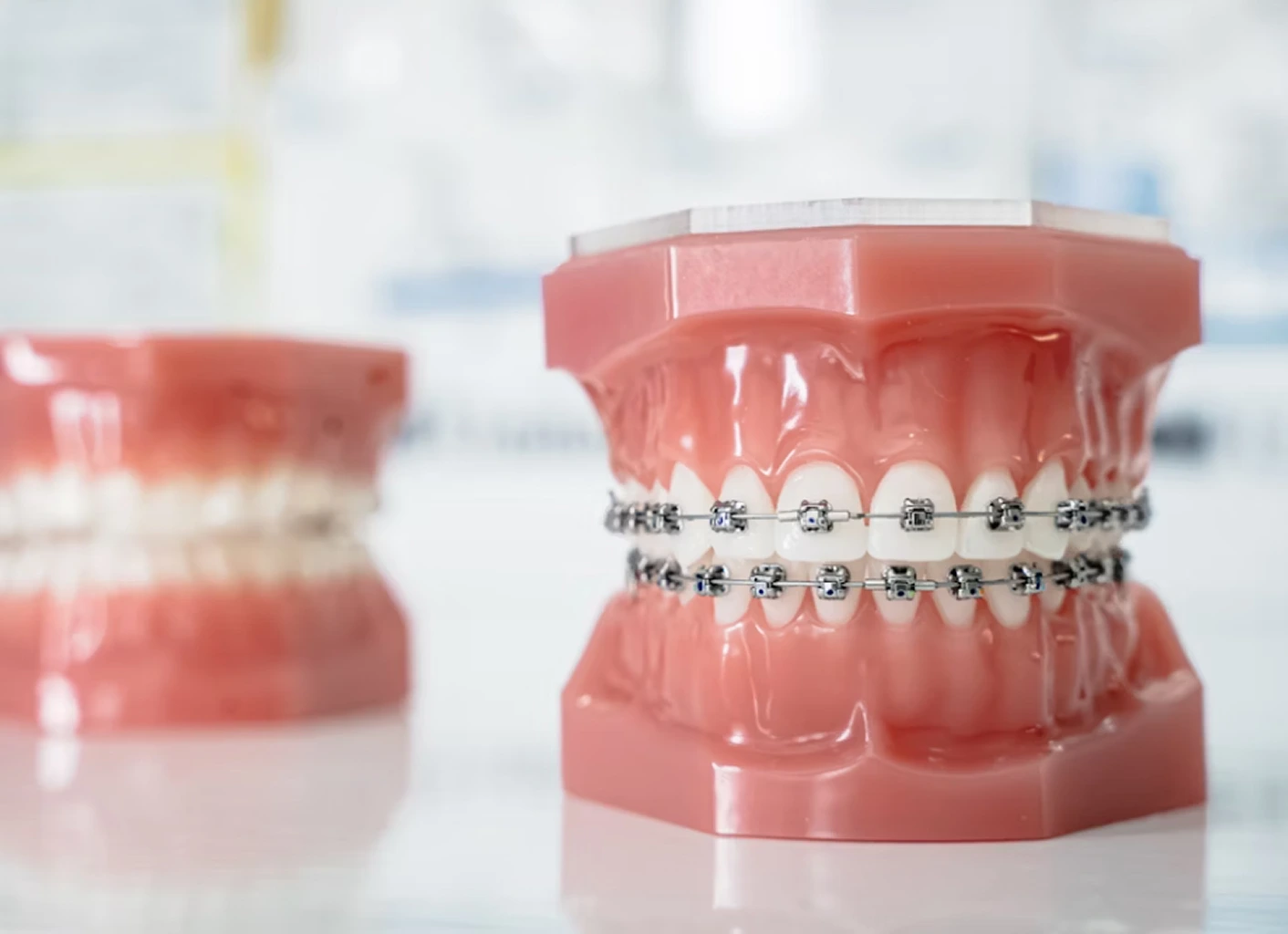
Children, adolescents, and adults with moderate to complex malocclusions.
What does “self-ligating” mean?
These brackets have a built-in mechanism that holds the archwire in place without elastic ligatures, allowing for programmed and efficient tooth movement.
Advantages
- Lower forces → less pressure-related discomfort
- Shorter treatment duration
- Reduced plaque accumulation
- Improved oral hygiene
- Highly precise tooth movement
Disadvantages
- Fixed appliance → increased oral hygiene required
- Visible (except ceramic bracket options)
Lingual Braces (Lingual Technique)
Who are they suitable for?
Adults and adolescents with high aesthetic demands.
What is the lingual technique?
The brackets are attached to the inner (tongue-facing) surfaces of the teeth and are virtually invisible from the outside.
Advantages
- Completely invisible
- Suitable for almost all types of malocclusion
- No visible braces during treatment
Disadvantages
- Higher technical complexity
- Adjustment period for tongue and speech
- More demanding oral hygiene
Conclusion: Which Braces Are the Best?
There is no single “best” type of braces for everyone.
The optimal solution depends on:
- Type and severity of the dental or jaw misalignment
- Age and growth stage
- Aesthetic preferences
- Desired comfort
- Patient compliance
In our practice in Wolfratshausen, south of Munich, we provide individualized consultations and work together with you to find the orthodontic solution that suits you best — functionally, aesthetically, and with long-term stability.