
Relaxing. Harmonizing. The best for your jaw joint.
For severe CMD symptoms—such as jaw joint pain, frequent headaches, excessive teeth grinding and clenching, and jaw joint clicking—a MAGO splint (maxillary anterior guided orthosis) often provides quick relief and helps reposition misaligned jaw joints. It restores harmony to the masticatory system. Learn more here: KFO360°

These temporomandibular joint splints are holistic, gentle, and harmonizing. They are regularly checked and adjusted, promoting rehabilitation of the masticatory system and restoring harmony between the muscles and temporomandibular joints.
Seven simple steps
Your Journey with the TMJ Splint (MAGO Splint)
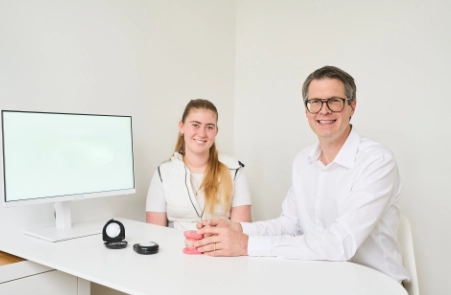

Initial consultation
We will ask about your symptoms and pain and examine your entire masticatory system as well as your head and body posture using our KFO360 approach.



CMD Diagnostics
We conduct a comprehensive, fully digital examination of your temporomandibular joints, muscles, teeth, and the rest of your body, and we perform the measurements according to our KFO 360° approach. This is because, for us, the key factor is the extent to which your temporomandibular joints are misaligned and damaged (osteoarthritis).


Meeting
We take plenty of time to explain our comprehensive treatment plan to you in detail. We’ll show you numerous X-rays of your temporomandibular joint, teeth, and bones, as well as screenshots from the digital functional analysis, so that you can understand for yourself why you’re suffering from TMD (temporomandibular disorder).


Adjusting the brace
Once it's ready, we'll make sure it fits comfortably and show you how to use it properly.


Wearing regularly
Now we need your cooperation. The splints must be worn properly so that we can treat your CMD (craniomandibular dysfunction) as quickly as possible and alleviate your symptoms.


Checkups, Adjustments, and Osteopathy
We regularly review your progress and make minor adjustments. In some cases, it makes sense to schedule a few osteopathy sessions immediately before the follow-up appointments.


Stabilization and Follow-up Care
Once a stable balance has been achieved in the masticatory system, we will discuss the next steps, including the transition to further treatment such as selective grinding, orthodontic treatment, or restorative procedures.

Our Features
Why a splint is the right choice for our CMD patients


Harmony between the temporomandibular joint, teeth, and muscles
Why not just straighten your teeth?
Thanks to our comprehensive approach, we strive to achieve the greatest possible balance and harmony in the masticatory system: muscles, temporomandibular joints, and nerves. Many patients opt for a second round of orthodontic treatment because, while their teeth were straightened during the first treatment, they do not align properly with the temporomandibular joints, resulting in discomfort.
Harmony in the masticatory system
The temporomandibular joint and body posture
Straight teeth alone are not enough to achieve lasting dental health free of pain and problems. We take a holistic, fully digital approach based on our proprietary KFO360° concept to restore harmony to the masticatory system.
Frequent headaches in young women
Why does CMD cause headaches?
Many young women and girls suffer from frequent headaches. No one—not even other doctors—considers the possibility that a misaligned bite could be causing these headaches. Just because teeth are straight doesn’t mean they’re properly aligned with the jaw joint. An imbalance in the masticatory system very often causes headaches and other symptoms throughout the body.
Since the age of 12
Severe, almost daily headaches
Having headaches 4 to 6 times a week is really bad. And this has been going on since I was 12. None of the doctors I saw (family doctors, neurologists, etc.) could really help. Triptans, which are strong medications for migraines and severe headaches, were prescribed, as were beta-blockers for preventive treatment. But treating only the symptoms instead of the cause is a second-best treatment option. We found the cause. It was an improper bite and misaligned temporomandibular joints. We treated this, and the headaches have almost completely disappeared.
CMD symptoms
Why there might be a solution for headaches.
Do you have to accept and endure headaches—even migraines—for the rest of your life? That’s what many women who suffer from these symptoms on a regular basis believe. They think these are “women’s problems” with no solution. In most cases, they’ve already tried a wide range of treatment approaches, but without much success. Surprisingly, headaches are very often caused by an improper bite. This means that the bite does not align with the temporomandibular joint, resulting in what is known as craniomandibular dysfunction (CMD). <br />
CMD symptoms
Tinnitus or ear pain? The temporomandibular joint is often to blame.
Many people suffer from ringing in the ears or ear pain for years and feel they simply have to put up with it. It’s not uncommon for ENT examinations to yield no clear findings—yet the symptoms persist. What many people don’t realize is that the cause may lie in the temporomandibular joint. A misalignment or dysfunction of the temporomandibular joint can directly affect the ear and trigger symptoms such as tinnitus or ear pain. This is exactly where we come in. Through a targeted analysis of the entire masticatory system, we identify connections that are often overlooked—and treat not just the symptoms, but the actual cause. Because lasting relief begins with the right diagnosis.<br /> <br /> <br />
The Dentist's Odyssey
A long search for help
Many patients often spend years or even decades searching for help and have to endure severe pain on a daily basis because no doctor can identify the cause or because they receive misdiagnoses. As a result, for example, healthy teeth are often unnecessarily extracted, and other ineffective treatments are attempted. Very often, the underlying cause is temporomandibular joint disorder.
Toothache and headache
What should you do if a girl has a headache?
Many girls suffer from headaches several times a week. Despite examinations by a pediatrician, ophthalmologist, or neurologist, the cause often remains unclear—yet the symptoms persist. What is often overlooked is the connection between the jaw, bite, and muscles. A bite that does not align harmoniously with the temporomandibular joint can place chronic strain on the muscles and thus trigger headaches. Our approach: We analyze the entire masticatory system and bring the teeth, temporomandibular joint, and muscles into harmony. The result: In many cases, headaches are significantly reduced—sometimes they even disappear completely.
holistic & sustainable
Say goodbye to neck pain—with KFO360°
Tension and pain in the neck are often attributed to stress or poor posture. But there’s often more to it than that: CMD (craniomandibular dysfunction).<br /> Misalignments in the temporomandibular joint can place constant strain on the muscles in the neck and shoulder area—resulting in pain and tension.<br /> Our approach: We analyze the entire masticatory system and treat the root cause—providing noticeable relief and greater mobility.<br />
CMD symptoms
Shoulder and neck tension.
Many people suffer from frequent neck and shoulder tension. At our specialized orthodontic practice in Wolfratshausen, we take a holistic approach, considering the entire body. Only when the teeth are gently and precisely aligned with the temporomandibular joint and the surrounding muscles does this stop negatively affecting posture. As a result, neck and shoulder discomfort is significantly reduced and treated effectively over the long term. The entire body depends on the teeth—as osteopaths have long maintained. <br />
Do you need a mouthguard (bruxism guard)?
If you suffer from temporomandibular joint disorder (TMJ), a MAGO functional splint can help relax your tense jaw and neck muscles and improve the alignment of your jaw joints.

For CMD
Ideal for young children who need gentle orthodontic treatment without fixed braces.

For headaches, including migraines
Many female patients suffer from frequent headaches when their bite is not properly aligned with their temporomandibular joints and muscles.

For harmony in the masticatory system and throughout the body
Only by combining regular, professional adjustments of the MAGO functional splint can an excellent result be achieved, leading to near-complete or complete relief from symptoms.
Malocclusion?
Before & After – Real Results with Removable Braces
See how removable braces gently move teeth over time—real results, real stories.

I used to get headaches so often—even migraines. No doctor could help me. I was even told I should work less. The MAGO splint treatment has changed my life. I hardly ever get headaches anymore. It’s like a miracle.

Duration of treatment
9 monthsHeadaches and Migraines
reduced to 20%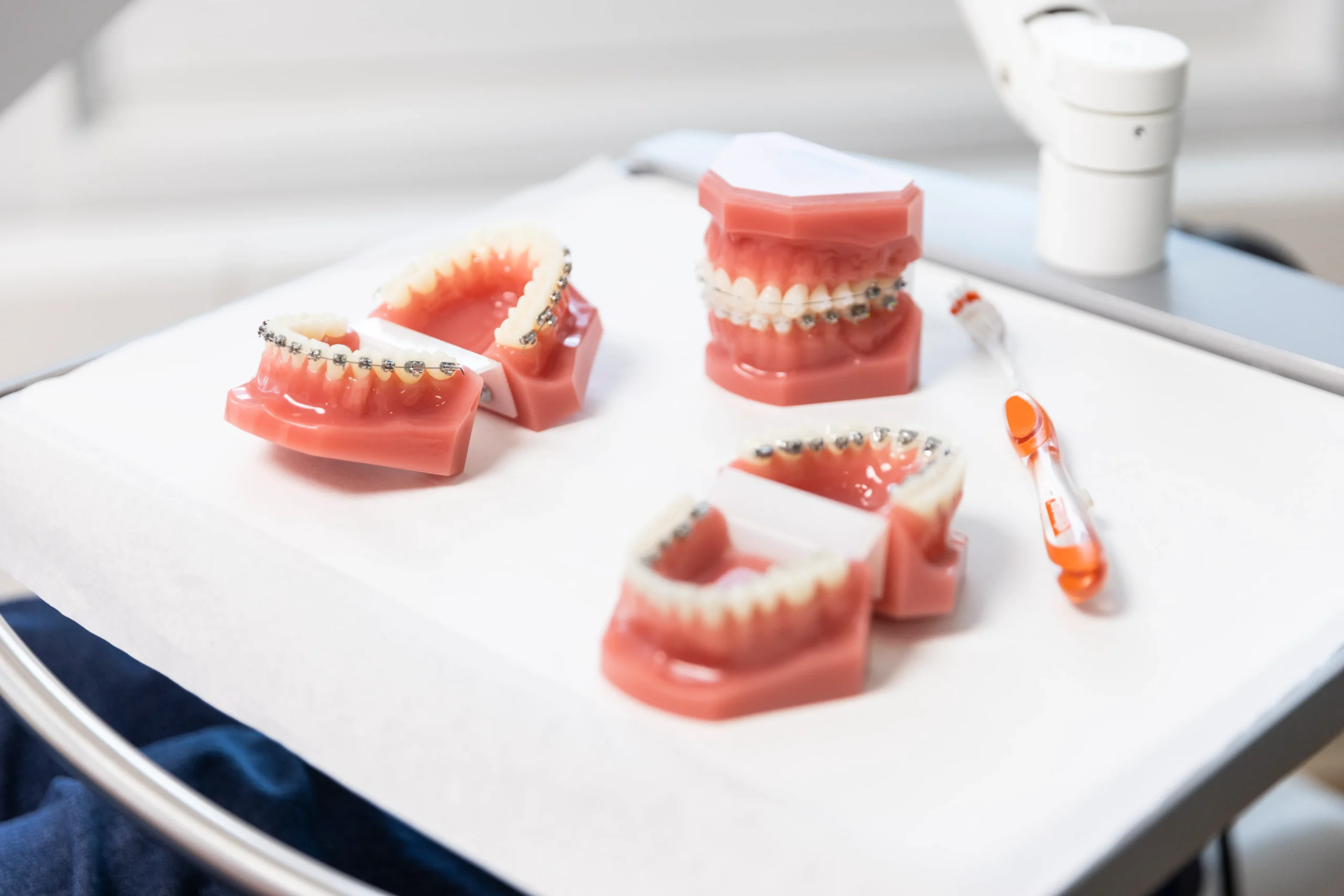
Care Instructions for TMJ Splints

Daily cleaning
Clean your aligner daily with a toothbrush and toothpaste. If there are any deposits, use cleaning tablets or citric acid, then rinse thoroughly with water.

Store safely
When you're not wearing your aligner, always put it in the aligner case we're giving you—that way, it's well protected and won't get lost.
Take the first step toward a healthier smile
Book an appointment


Frequently Asked Questions
How many hours a day should I wear removable braces?
The duration of wear depends on your individual treatment plan. In most cases, however, the aligners should be worn for 14 to 16 hours a day to achieve optimal results. Once we have made significant progress, it is often sufficient to wear the aligners only at night for stabilization.
Can I eat with removable braces?
No, it's best to take them out when eating or drinking (except for water). This will help prevent damage and keep your braces clean.
Are removable braces comfortable?
Most patients find them more comfortable than traditional braces. A slight feeling of pressure at first is normal, but it usually goes away once your teeth have adjusted.
How do I clean my removable braces?
Rinse your retainer with water before each use and clean it thoroughly every day with toothpaste and a medium- to hard-bristled toothbrush. If buildup forms that can no longer be removed with a brush, we recommend a deep clean—either with special cleaning tablets or citric acid powder. To do this, simply dissolve some powder in hot water and let the aligner soak for 15–30 minutes. Important: Always rinse the aligner thoroughly with water before reinserting it to ensure no residue remains.
What happens if I forget to wear it?
Missing a day of wear can slow down your progress. If you forget to wear them once, make sure to wear your braces as much as possible over the next few days—but let your orthodontist know if this happens frequently.


